An emergency fund is simply money you set aside for life’s unexpected costs, so a surprise bill doesn’t turn into a full-blown crisis. It’s the cushion that keeps a car repair, a medical bill, or a sudden loss of income from pushing you into debt. This guide covers why it matters, how much to save, where to keep it, and a plain-English plan to build one from scratch.
Table of Contents
Why an Emergency Fund Matters More Than You Think
Life tends to send its surprises when your budget can least handle them. The boiler breaks, the car won’t start, or your hours get cut at work. Without a buffer, these moments usually end with a growing credit card balance or a loan you’ll be chipping away at for months.
An emergency fund changes that story. It gives you a pool of cash to lean on, so one rough week doesn’t quietly turn into long-term debt. Just as importantly, it buys you a bit of calm. Knowing you can absorb a shock without panicking is a real form of freedom.
Think of it as a kind of self-insurance. You’re quietly paying your future self to stay steady when something goes wrong, instead of scrambling or borrowing at the worst possible moment.
It also protects the rest of your money. When you have cash set aside for surprises, you’re far less likely to raid your long-term savings, miss a bill, or make a rushed decision you’ll later regret.
There’s a mental side to this as well. Money worries are one of the most common sources of everyday stress, and much of that pressure comes from feeling one bad week away from trouble. A reserve won’t fix every problem, but it removes a constant background hum of worry and lets you think clearly when a genuine decision arrives.
How Much Should You Save?
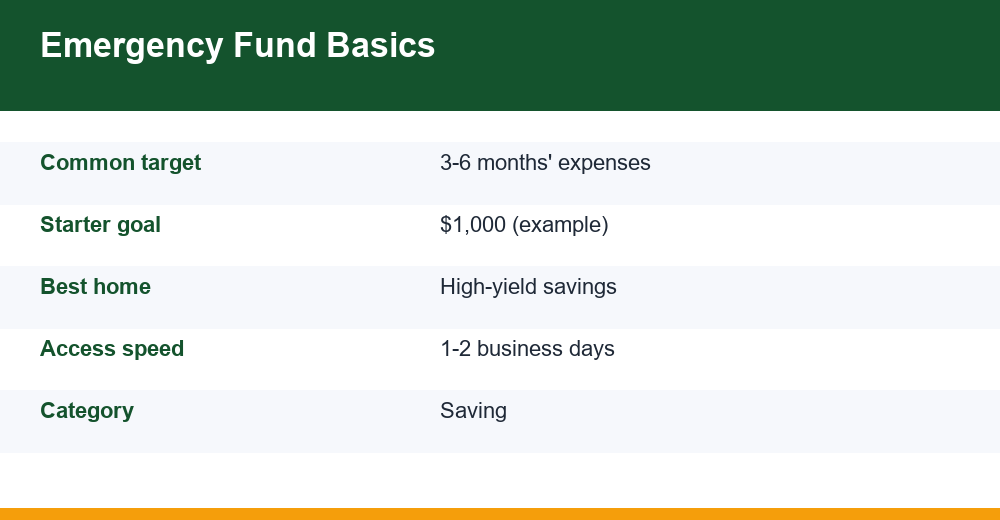
The classic guideline is to save enough to cover three to six months of essential expenses. “Essential” is the key word: rent or mortgage, utilities, groceries, transport, insurance, and minimum debt payments. It doesn’t need to stretch to holidays or dining out.
That figure can feel enormous when you’re starting out, so break it into stages. A first goal of around $500 to $1,000 handles most everyday surprises. From there, you can build toward one month of costs, then three, then six.
Your ideal target also depends on your life. If you have a stable salary and a partner who earns too, the lower end may be plenty. If you’re self-employed, on an irregular income, or the only earner supporting others, it’s worth aiming higher for extra breathing room.
A few personal factors nudge the number up or down. Job security matters, so a stable role or industry lets you lean toward the lower end. So does the size of any insurance excess you might face, the number of people who rely on your income, and whether you have other support to fall back on. The more uncertain your situation, the larger the cushion worth building.
It’s also fine to move the goalposts as you go. Many people set a modest first target, reach it, and only then decide whether to keep building. There’s no single correct number, just the amount that lets you sleep at night given your bills and responsibilities.
The example figures below are illustrative only, meant to show how the maths works rather than to recommend a specific amount. Swap in your own essential spending to find a realistic goal for your household.
| Monthly essentials | 3-month cushion | 6-month cushion |
|---|---|---|
| $2,000 | $6,000 | $12,000 |
| $3,000 | $9,000 | $18,000 |
| $4,500 | $13,500 | $27,000 |
Try not to be discouraged by the larger numbers. Every dollar you save is one less dollar you’d have to borrow, so even a partly built cushion is genuinely useful from day one.
Where to Keep Your Emergency Fund
Your safety net needs to tick three boxes: it should be safe, easy to reach within a day or two, and ideally earning a little interest while it waits. It also helps for it to sit apart from your everyday spending account, so it isn’t quietly nibbled away.
For most people, a high-yield savings account strikes a good balance. Your money stays liquid and protected, yet earns more than it would in a standard current account. Keeping it at a different bank from your daily spending adds a helpful bit of distance, so you’re less tempted to dip in.
It’s worth thinking about protection too. In many countries, money held in a regulated bank or building society is covered by a government-backed deposit guarantee up to a set limit, which is another reason a savings account beats cash kept at home. Check the specific limit and rules where you live, since they vary from place to place and change over time.
One thing to avoid is parking your safety net in the stock market or crypto. Investments can fall in value at exactly the wrong moment, and investing always carries risk, including the possible loss of the money you put in. This cash needs to be there in full on the day you need it.
Be cautious, as well, with anything that locks your money away. A fixed-term deposit or notice account may pay slightly more, but if you can’t reach the cash the day a boiler dies, it isn’t doing the job of a reserve. Keep the core of your fund somewhere you can tap quickly.
| Option | Easy to access? | Earns interest? | Good fit? |
|---|---|---|---|
| High-yield savings | Yes, 1-2 days | Yes | Strong choice |
| Everyday checking | Instant | Little to none | Too tempting |
| Money market account | Yes | Usually yes | Solid option |
| Stocks or crypto | Varies | Volatile | Too risky |
| Cash at home | Instant | No | Tiny amount only |
A small amount of physical cash at home can help in situations where cards or apps won’t work, but keep it modest. The bulk of your reserve belongs somewhere safe that also earns a return.
A Step-by-Step Plan to Build Your Fund From Zero
Starting from nothing is not a problem at all. What matters far more than the amount is building a steady habit. Here’s a simple sequence that works whether you can spare $10 a week or $200.
- Set a small first goal. Aim for something reachable, like $500 or $1,000. Hitting an early milestone builds momentum and proves to yourself that this genuinely works.
- Work out your real surplus. Subtract your monthly spending from your income. Whatever’s left is the most you can save comfortably. If there’s little to spare, our guide on how to save money has practical ways to free up cash.
- Open a separate account. Keeping this money apart from your daily spending removes the temptation to dip in for a takeaway or an impulse buy.
- Automate every payday. Set up an automatic transfer for the day you get paid. If the money moves before you see it, you won’t miss it, and saving stops relying on willpower.
- Funnel in any windfalls. Tax refunds, work bonuses, cash gifts, or a side-hustle payment can give your balance a real jump without touching your regular budget.
- Keep going until you reach your full target. Once your emergency fund is complete, you can turn your energy toward other money goals with a real safety net behind you.
It also helps to make your progress visible. Name the account something clear like “Emergency Fund”, or track a running total on your phone, so you can watch the balance climb. Seeing the number grow is quietly motivating, and it makes the habit feel worthwhile long before you reach the finish line.
Once the fund is fully stocked, you don’t have to keep adding to it forever. At that point you can redirect those automatic transfers toward other goals, such as paying down debt faster or, if it suits your plans and comfort with risk, longer-term investing. Just remember that investing carries risk, so keep your reserve separate from anything you put at stake.
Small and consistent beats big and occasional. Even modest weekly transfers add up faster than you’d expect once they become automatic and you stop noticing them leave.
Emergency Fund vs. Sinking Funds
People often mix these two up, but they do different jobs. Your emergency reserve is for the unexpected: the events you can’t see coming and can’t schedule. A sinking fund is for the expected: costs you know are on the way but that don’t arrive every month.
A car service, holiday gifts, an annual insurance premium, or replacing an ageing laptop are all planned expenses. Saving for them separately means they don’t ambush your budget, and it keeps you from raiding your safety net for things that were never true emergencies.
If the difference is new to you, our explainer on what are sinking funds shows how to set them up alongside your reserve. Used together, the two systems cover almost everything life throws at your wallet.
In practice, many people run one emergency reserve plus a handful of small sinking funds for the costs they can predict. When the car service comes around, the money is already waiting, the bill feels routine, and the reserve stays untouched for the things you genuinely cannot plan for.
| Feature | Emergency reserve | Sinking fund |
|---|---|---|
| Purpose | Unexpected shocks | Planned costs |
| Timing | Unknown | Known in advance |
| Example | Job loss, repair | Holidays, car service |
| How many | Usually one | One per goal |
What Counts as a Real Emergency?
This fund only works if you’re honest about when to use it. A good test is to ask three questions: Is it unexpected, is it necessary, and is it urgent? If the answer to all three is yes, that’s exactly what your reserve is for.
Genuine emergencies usually look like this:
- A sudden loss of income or reduced hours
- Urgent medical or dental costs
- Essential home repairs, such as a broken boiler or leaking roof
- A car repair you need to get to work
- An unavoidable emergency trip to help family
These, on the other hand, are not emergencies, even when they feel pressing in the moment:
- A sale or a tempting upgrade to a phone or gadget
- A holiday or weekend away
- Predictable annual bills you could plan for with a sinking fund
- Everyday overspending late in the month
Some costs sit in a gray area, and that’s perfectly normal. A necessary but not-quite-urgent repair, or a bill that’s larger than expected, may call for judgment. When you’re unsure, pause and ask the three questions honestly. Over time you’ll develop a clearer feel for the line between a true emergency and a want dressed up as a need.
If you do dip in for a real emergency, that’s a success, not a failure. The fund did its job. Once things settle, simply restart your automatic transfers and rebuild the balance back to your target.
Common Mistakes and How to Stay on Track
A few simple slips trip most people up. Steer clear of these and you’ll build your cushion far more smoothly:
- Keeping it too accessible. If it sits in your main current account, you’ll spend it without meaning to.
- Waiting for the “perfect” moment. There isn’t one. Start with whatever you can spare today.
- Investing money you might need soon. Your reserve should be steady cash, not a bet on the markets.
- Not rebuilding after you use it. Treat topping it back up as a normal, expected part of the cycle.
One more habit worth building is a yearly review. As your rent, income, or family situation changes, the right size for your reserve changes too. Once a year, check that your target still matches your real essential spending, and nudge your automatic transfer up or down if it needs it.
For free, unbiased help with building savings, the U.S. government’s Consumer Financial Protection Bureau publishes plain-language guides and tools that don’t try to sell you anything.
Finally, a quick but important note. This article is general educational information, not personalized financial, investment, tax, or legal advice. Every figure here is an illustrative example, not a promise or a current rate. Your situation is unique, so weigh your own circumstances and speak with a licensed professional before making any big money decision.
Frequently Asked Questions
How much should I have in an emergency fund?
Most guidance suggests three to six months of essential living costs. If that feels daunting, start with a smaller goal of around $500 to $1,000, then build up in stages. Aim higher if your income is irregular or you’re the only earner. These figures are general examples, not advice for your specific situation.
Where is the best place to keep an emergency fund?
A high-yield savings account is a popular choice because your money stays safe, easy to reach within a day or two, and earns a little interest. Keeping it at a separate bank from your everyday spending reduces the temptation to dip in. Avoid investments or accounts that lock the cash away.
Should I build an emergency fund or pay off debt first?
Many people do both at once: build a small starter cushion of a few hundred dollars, then split spare cash between the fund and debt. That way a surprise bill won’t force you back into borrowing while you’re paying things down. A licensed adviser can help you weigh your own numbers.
What if I have to use my emergency fund?
That’s exactly what it’s for, so using it is a win, not a setback. Once the situation settles, restart your automatic transfers and rebuild the balance to your target. Treat topping it back up as a normal, expected part of the cycle rather than a step backward.