
Zero based budgeting is a simple money method where you give every single dollar a job before the month begins, so your income minus your planned spending comes to exactly zero. It is not about spending nothing; it is about spending on purpose. This plain-English guide walks you through how it works, a full worked example, who it suits, and whether it is the right fit for your life.
Table of Contents
What Is Zero Based Budgeting?
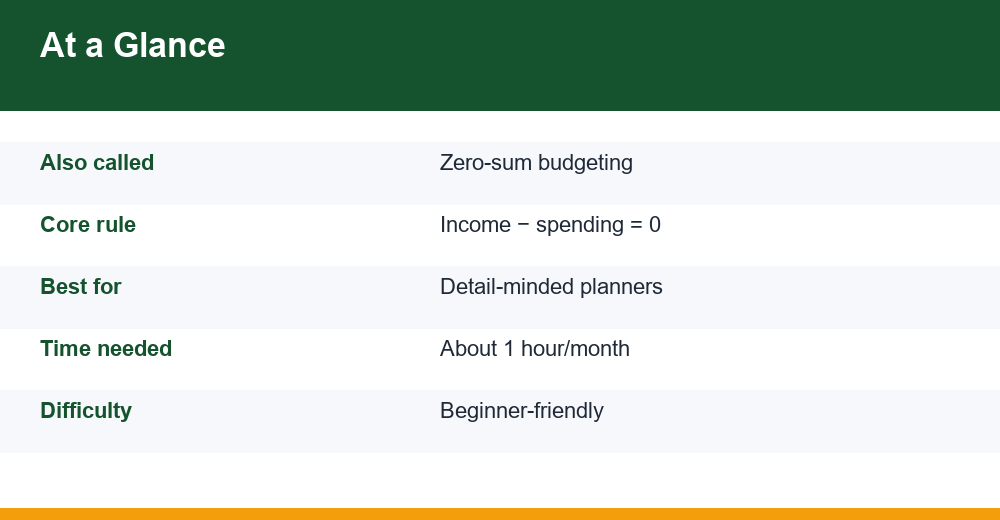
At its heart, this is a way of planning your money where every dollar you earn is assigned a purpose before you spend it. You start with your monthly income, then hand out that money to categories like rent, groceries, savings, and fun, until nothing is left unassigned. The name comes from that final total: your income minus everything you have planned equals zero.
That zero can trip people up, so let us clear it up. It does not mean your bank balance drops to nothing. It means you have decided, on paper, where all of your money is going, rather than letting it drift away on things you cannot quite remember. The idea behind zero based budgeting is refreshingly straightforward: money without a job tends to disappear.
Unlike a set-and-forget plan, you build this budget fresh each month. Your income, bills, and priorities change, so your plan changes with them. Some people call this a zero-sum or every-dollar approach, but they all describe the same simple habit of assigning money on purpose.
It helps to picture your paycheck as a stack of bills you physically hand out. Each dollar goes into an envelope with a label, whether that label is rent, retirement, or a weekend treat. When the last dollar is placed, the stack is empty and your plan is complete. That mental image is the whole method in a nutshell.
- Every dollar is given a role, from bills to birthday gifts.
- Savings and debt payments are treated as planned spending, not leftovers.
- You rebuild the plan each month to match real life.
- The goal is intention, not restriction.
How to Give Every Dollar a Job
The mechanics are simple enough to sketch on the back of an envelope. If you have never mapped out your spending before, our walkthrough on how to make a budget pairs nicely with the steps below. Here is the full rhythm, start to finish.
- Add up your monthly income. Include your take-home pay and any reliable side income. Use the amount that actually lands in your account.
- List your expenses. Write down every regular bill, then the flexible costs like food and transport, and finally the occasional ones like car repairs.
- Include goals as line items. Treat an emergency fund, retirement contributions, or debt payoff as their own categories with real amounts.
- Assign until you reach zero. Give money to each category until your income is fully spoken for. If money is left, send it to savings or debt. If you run short, trim a flexible category.
- Track and adjust as the month unfolds. When one category runs low, move money from another. This is normal, not failure.
Notice that savings comes first, as a planned amount rather than whatever survives to month-end. That single shift is what makes this method feel so different from just watching your balance and hoping.
It also helps to name a small buffer category, sometimes called miscellaneous, for the tiny costs that never fit neatly anywhere. A parking meter, a birthday card, a last-minute school fee: these add up quietly. Giving them a home keeps the rest of your plan honest and stops one stray purchase from knocking everything off balance.
A Worked Example You Can Copy
Numbers make this click, so here is a sample month for someone we will call Maya. Every figure below is an illustrative example only, chosen to show the method, not a recommendation, a real budget, or a guaranteed outcome. Maya brings home 3,000 dollars this month and gives all of it a job.
| Category | Amount | Notes |
|---|---|---|
| Rent | $1,050 | Fixed bill |
| Groceries | $400 | Flexible, watch weekly |
| Utilities & phone | $220 | Fairly steady |
| Transport | $180 | Fuel and transit |
| Emergency fund | $300 | Paid like a bill |
| Debt payment | $350 | Above the minimum |
| Fun & eating out | $200 | Guilt-free money |
| Insurance | $150 | Fixed bill |
| Household & misc | $150 | Buffer for surprises |
| Total assigned | $3,000 | Income − plan = $0 |
Every dollar has landed somewhere, and the plan balances to zero. If Maya overspends on groceries one week, she can pull 30 dollars from her fun category to cover it, then move on. Nothing breaks, because the plan is meant to flex with real life.
Notice how savings and debt together take a meaningful slice, six hundred and fifty dollars in this illustration, and sit near the top of the list rather than the bottom. That ordering is deliberate. When your future is funded first, the money left for daily life is money you can truly spend without a nagging sense of guilt.
Who Zero Based Budgeting Suits Best
No single method fits everyone, and that is fine. Zero based budgeting tends to shine for people who like a little structure and want to know exactly where their money goes. If you have ever reached the end of the month wondering where it all went, this approach can feel like turning the lights on.
It is especially handy for variable incomes. Freelancers and shift workers can build a fresh plan each month around whatever actually arrived, instead of guessing. It also suits anyone chasing a clear goal, such as paying down a card or building a first emergency fund.
- People who want a clear, detailed picture of their spending.
- Freelancers and anyone with an income that changes month to month.
- Households working hard toward a specific savings or debt goal.
- Anyone who has found looser methods too vague to stick with.
Who might find it a stretch? If you strongly prefer a hands-off system, a percentage-based plan may feel gentler. The good news is you can borrow the best parts of this method without adopting all of it.
It is also a kind approach for anyone rebuilding after a financial setback. Because you plan with the money you actually have, not the money you wish you had, the method meets you where you are. Small, honest numbers still add up to a plan you can trust and repeat.
How It Compares to Other Methods
It is worth seeing this approach beside a couple of popular alternatives, because the best budget is the one you will actually keep. The table below sketches how a few common methods differ in effort and detail. None is objectively better; they simply suit different temperaments and different seasons of life.
| Method | Effort | Detail | Best when |
|---|---|---|---|
| Every-dollar plan | Higher | Very high | You want full control |
| 50/30/20 rule | Low | Low | You want simple guardrails |
| Pay-yourself-first | Low | Medium | Saving is your top goal |
| Envelope system | Medium | High | You overspend on cards |
Many people mix and match. You might use the every-dollar structure for the categories you tend to overspend, while keeping a looser percentage rule for the rest. There is no prize for purity here. Borrow whatever keeps you engaged, and let your system grow up as your finances do.
The Real Pros and Cons
Honesty helps here, so let us weigh both sides. This method asks for a bit more effort than a rough rule of thumb, and in return it gives you real clarity and control. Whether that trade is worth it depends on your temperament and your goals.
What people love about it
- You see every dollar, which makes overspending obvious and easy to fix.
- Savings and debt payoff get funded on purpose, not by accident.
- It adapts each month, so a tight month and a flush month both work.
- It builds a genuine habit of thinking before you spend.
Where it can feel like work
- The first month or two takes real setup time and attention.
- Irregular expenses can throw off a plan if you forget to save for them.
- It rewards consistency, so a busy stretch can leave the plan stale.
One quiet benefit is emotional, not just financial. Seeing every dollar accounted for tends to lower money anxiety, because uncertainty is what makes finances feel scary. A plan you can point to, even an imperfect one, replaces that vague worry with a sense of quiet control.
If the effort feels heavy at first, that is completely normal. A handful of small habits, like a weekly five-minute check-in, smooth the whole thing out. Our roundup of practical budgeting tips can help you make the routine feel lighter and more natural.
Common Mistakes to Sidestep
Most people who give up on a budget do so for a few predictable reasons, and every one of them is avoidable. Knowing the traps ahead of time makes the whole process far less bumpy.
- Forgetting irregular costs. Car registration, holidays, and annual subscriptions blindside a budget. Set aside a small amount monthly so they never surprise you.
- Building an unrealistic plan. If you give yourself 50 dollars for groceries you cannot live on, the plan collapses. Base each category on what you actually spend.
- Leaving no fun money. A plan with zero breathing room rarely lasts. A modest guilt-free category keeps you motivated.
- Never adjusting. Moving money between categories mid-month is a feature, not a slip-up.
- Chasing perfection. A plan that is roughly right and used beats a flawless one you abandon.
If you slip up, resist the urge to scrap the whole plan. A single overspent category is a small course correction, not a reason to quit. The people who succeed are simply the ones who start again next month, a little wiser, rather than walking away entirely.
For plain-language guidance on building healthy money habits, the U.S. government’s Consumer Financial Protection Bureau offers free, unbiased tools and worksheets that pair well with any budgeting method.
How to Start Your First Budget
Ready to try it? You do not need fancy software to begin. Many people start zero based budgeting with a single sheet of paper or a basic spreadsheet, and only later reach for an app once the habit sticks. Keep the first month simple and forgiving.
- Gather last month’s bank and card statements so your numbers are real.
- Write down your expected income for the coming month.
- List your categories, including savings and debt, and assign money to each until you hit zero.
- Do a quick weekly review and move money between categories as needed.
- At month-end, notice what worked, then build next month’s plan fresh.
If a paper plan starts to feel fiddly, a good tool can automate the maths and the tracking. Our guide to the best budgeting apps compares options that support the every-dollar style, so you can pick one that fits how you think.
Give yourself a full three months before you judge how it is going. The first month is a rough draft, the second is a correction, and by the third your categories start to reflect real life. Budgeting is a skill like any other, and a little patience early on pays off for years.
One last note. This article is general educational information, not personalized financial, tax, or legal advice. Everyone’s situation is different, so consider your own circumstances and, for important decisions, speak with a licensed or qualified professional. If your plan includes investing, remember that all investing carries risk, including the possible loss of the money you put in.
Frequently Asked Questions
Is zero based budgeting good for beginners?
Yes. It is one of the clearest methods to learn because the rule is simple: give every dollar a job until your income minus your plan equals zero. Beginners often like how visible it makes their spending. Start on paper for a month, then add an app once the habit feels comfortable.
How is it different from the 50/30/20 rule?
The 50/30/20 rule splits income into three broad buckets and needs little upkeep. This method is more detailed, assigning every dollar to a specific category and rebuilding each month. One trades precision for ease, the other trades a little more effort for tighter control. Many people blend the two.
Can this method work with an irregular income?
It works remarkably well for variable pay. Because you build a fresh plan each month around the money that actually arrived, you never overcommit based on a good month. In leaner months, fund your essentials and savings first, then assign whatever remains to flexible categories like eating out.
Does a zero-based budget mean I cannot save?
Not at all. Saving is central to it. You treat savings, an emergency fund, and debt payoff as planned categories that get funded first, before flexible spending. So reaching zero simply means every dollar has a purpose, and a healthy share of those dollars is going toward your future.